In Genesis 28 (verses 10–19) Jacob, one of the heroes of the Old Testament, has an incredible dream. He sees a ladder reaching up to heaven and the angels of God ascending and descending on the ladder. He sees God standing beside him and promising to bless him, just like he promised to bless his ancestors, his grandfather Abraham and his father Isaac. So, in his dream, Jacob has a spiritual experience, a religious experience. In the tradition the presence of the angels is revealing. Angels were seen as messengers from God: God is giving Jacob a message.
This dream occurs at a crucial point in his life; he has just tricked his brother, Esau, out of their father’s blessing. The tradition was that the father, at the end of his life, would bless his eldest son. The eldest son was Esau, not Jacob – they were twins actually, but Esau came out first, so he was the one who should have received the special blessing. But Jacob tricks his father, who was old and blind, into blessing him instead of Esau.
It’s hard for us to imagine how horrible this was. For a first-born son to lose your blessing from your father was a terrible thing to have happened. Perhaps the equivalent would be Prince Harry somehow manipulating his way into being King ahead of Prince William. I like to tease a friend of mine by saying that it wouldn’t take much for Harry and Meghan to be on the throne. His response is always, “I would become a republican!” To which I reply, “You would not!” But this is the equivalent. Esau is enraged, so angry that he threatens to kill Jacob, so Jacob takes off.
It is while he is fleeing that he realises he has come to a special place, a place where he dreams that God is right beside him, blessing him, supporting him through this difficult time. This dream and the realisation that God has come to him in this special place, is what turns Jacob’s life around. He goes from being a thief on the run, to the next leader in the family, the one who continues to worship God and who passes on the faith to his 12 sons and their families. It is his experience of God in a special place, which turns his life around.
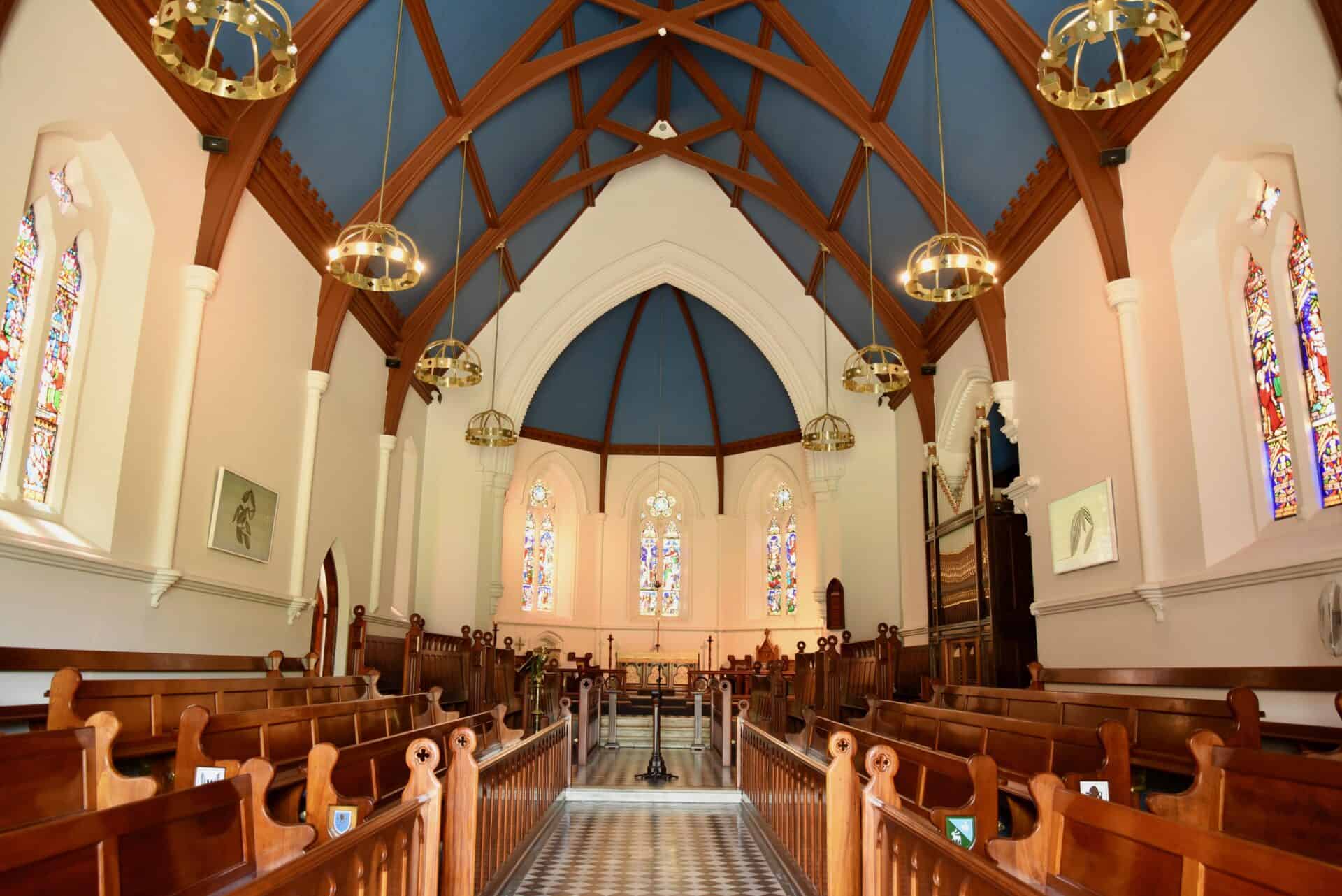
Have you ever been in a place, which has felt special? I find the Chapel to be a good place to feel close to God. Before our actual chapel services, I go in there to set up and, if I’m not rushed, I like spending just a few moments being quiet. Sometimes I pray, just quietly in my mind, but often I just enjoy the stillness and think about the fact that for over 150 years people have come into the place and worshipped God. If you spend time being quiet in a church or a chapel it can be quite a refreshing experience. Of course, you can have quiet time anywhere and you can say prayers anywhere, but there is something about churches, especially old churches, that creates a good atmosphere.
A few years ago, I had the opportunity to attend a conference being held in Canterbury. Canterbury Cathedral is absolutely majestic: Thomas a Becket’s shrine, the history, the crypt, the daily Eucharist in the little side chapels. There is another, far less impressive church, at least visually, close by: St Martin’s – the oldest church still in use in England. Visually it looked old but nowhere near as impressive as the Cathedral. Yet, it was a remarkable place.
Another deeply spiritual place for me is the Flinders Ranges. Most years I try and get up there to support our Year 10 students as they go on their three-week hike. It’s one of the places I think is pretty special. It’s one of the places that I feel close to God; I sense something of God’s presence in the wilderness. It seems to be easier to sense God out in nature, in the places where it’s quiet. It’s a good reminder to me that God is not just found in the beautiful chapels and churches we so enjoy.
It is this sense of the sacred that can drive our environmental action. It is a sense of being connected. It’s interesting that Jacob becomes acutely aware of God’s presence after a time of losing contact with God, after a time of trickery and betrayal. The presence of the divine is closer than he realises. Closer than breathing. We are made in God’s image. We are created by God and being aware of this can be a powerful reminder to care for the rest of God’s creation.
One of the features of our Chapel is that the ceiling is covered with stars. It is a nod, I think, to Abraham’s experience of God’s presence at he looks up at the night sky. In our frenetic world of technology and busyness, it is easy to become disconnected from the rest of God’s creation. Our ancestors didn’t make that mistake. They knew that God was all around them, present everywhere. They were much more connected with God’s creation. Apparently our prehistoric ancestors, those who lived before significant farming was established, were extraordinary local navigators. They knew the land and could read the seasons. A great reminder of my connection with the local environment when I walk to walk in the grounds of the School and the resident magpies greet me. I’m part of their family – I belong there. In the summer, God is present in the evening breeze that cools me at the end of a long, hot day.
Teilhard de Chardin, the French Jesuit priest, wrote about the “the breathing together of all things” to convey the interconnected nature of all of creation and to remind us of the truth that we flourish and suffer together. The health of our planet and of the air are inextricably tied with our own health, and we know that the air is a sacred gift that we must protect.
I think we all need a place where we can be quiet and reflect: a place where we can quieten ourselves and become more aware of God’s presence. For me it’s actually this chapel and, when I’m in the zone, during a bike ride. The other place is St Peter’s Cathedral in Adelaide. It is a remarkable building. We all need to find a place we can be quiet and still and reflect on life and our relationship with God.
The Reverend Dr Theo McCall
School Chaplain