Equality under Christ
Life is precious! We should never take it for granted nor assume that the rights we enjoy in Australia are universally shared. One of the sad realities of the ancient world, which still affects parts of our world today and at times even parts of Australian society, was that women and girls were considered second-class people.
Slaves were obviously at the bottom of the ladder, then women and girls, then (roughly) adult males who were not Roman citizens and boys who were, and then at the top adult men who were Roman citizens. There were lots of factors which influenced your social standing, but that was the basic picture.
What made Christianity so revolutionary and so dangerous was that it said, “Everyone is equal”. If you have a society built on a strict hierarchy, with slaves and then women and girls down the bottom, to say that everyone is equal is revolutionary! No wonder the Romans tried their best to stamp Christianity out! If you say that God loves everyone equally, it’s pretty revolutionary.
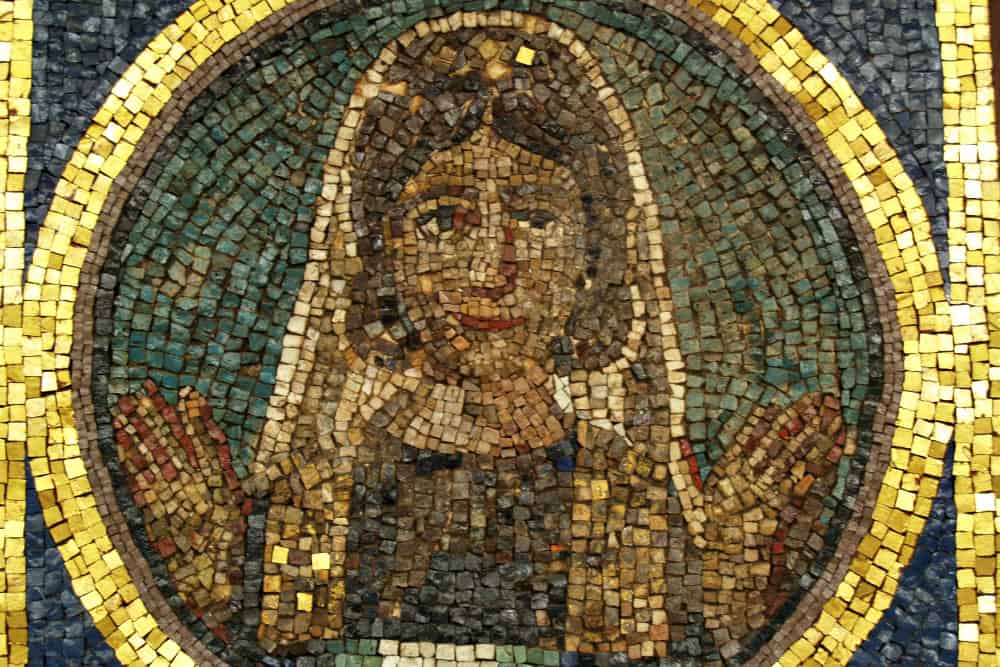
I’d invite you to have a careful look at the last section of St Paul’s letter to the Church in Rome (Romans 16:1–2 and verse 7). St Paul is writing in about 55 AD, roughly 25 years after Jesus’ death and resurrection. He refers to Phoebe, a deacon. That means that she is one of the leaders of the Church. Just think about that in the context of the 1st century in the Roman Empire: a woman being a leader in the Church. Then, a few verses later, “Greet Andronicus and Junia, my relatives who were in prison with me; they are prominent among the apostles …” This is a husband and wife team who were leaders in the Church, because St Paul calls them apostles. Junia is considered by Paul to be equal to her husband and she is one of the leaders of the Church.
Jesus and the early Church, including St Paul, were saying that women were equal with men under God. In other words, they were all equally Christian and there was no hierarchy. How extraordinary is this reading in the context of the Roman Empire in the 1st century? We forget just how significant it is! May it remind us all, as we strive for greater equality in our own time.
The Reverend Dr Theo McCall
School Chaplain
Image credit: Wikimedia Commons/Miguel Hermoso Cuesta