When he was visiting Athens in the first century, St Paul discovered a shrine with the inscription, ‘To an unknown god’ (Acts 17: 22–28). He used this inscription to try and convince the people of Athens that this unknown god was in fact the Creator, the one who had made everything, and was present everywhere.
One of the things which made Christianity so odd in the ancient world was that it didn’t have any idols. There were no statues which the Christians worshipped, unlike the religion of the ancient Greeks and Romans, who had statues everywhere. The Greeks and Romans believed the statues contained the spirit of the god they represented and that, by worshipping the statue, the god would hear their prayers. But Christians believed that God was everywhere, close to everyone. You didn’t have to have an idol in order to get close to God – all you had to do was pray.
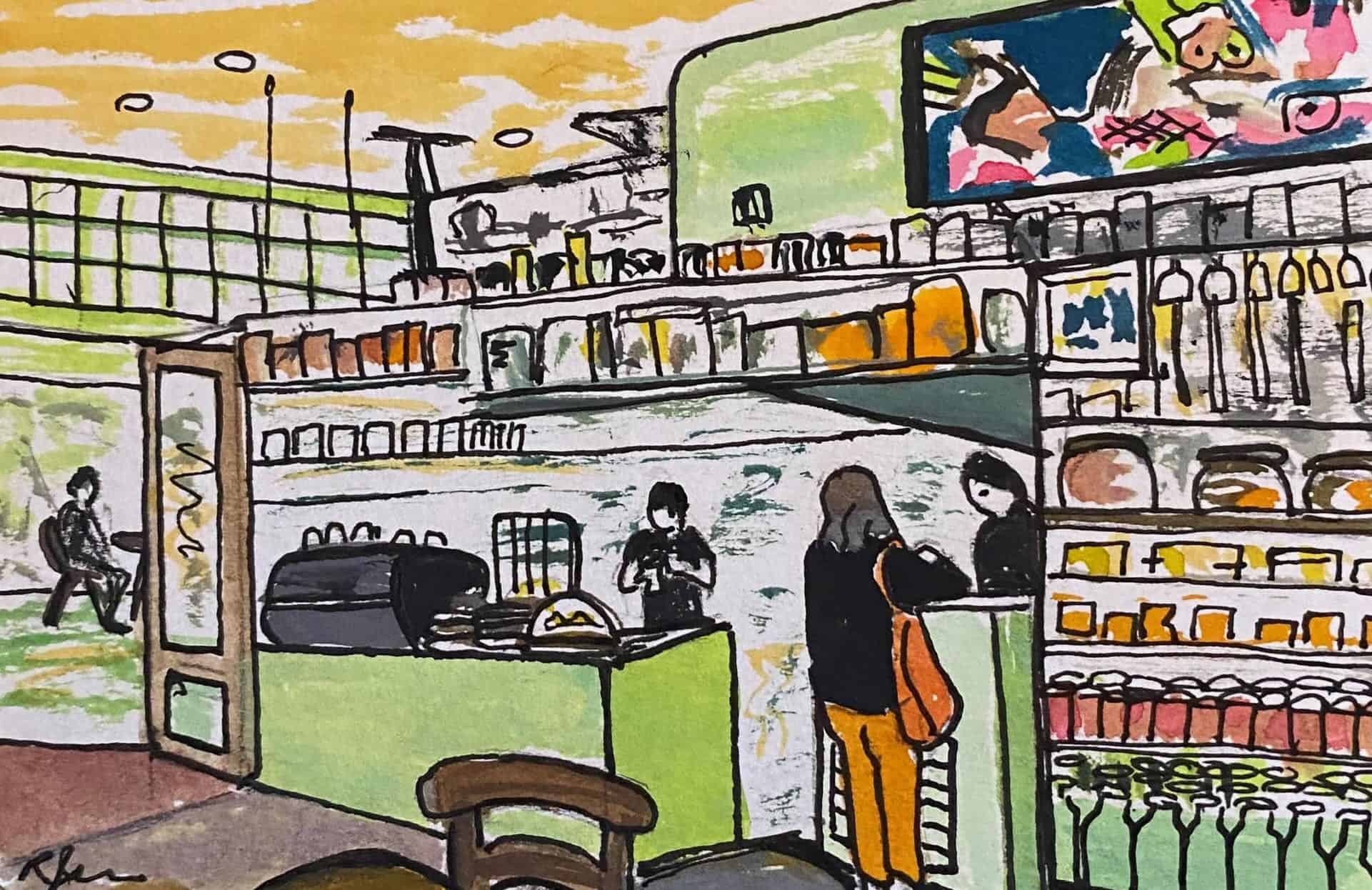
Of course, there are some places where we naturally feel closer to God. I feel close to God by the ocean, in our Chapel when I have a quiet moment in there, and believe it or not, I feel close to God during the holidays when I get the chance to go to the Adelaide Central Market. When I sit down with a nice coffee from Zuma’s and just soak up the atmosphere, I feel God’s presence. There is something about the hum of human activity, the sound of families, shop keepers, musicians occasionally, which makes me think, “This whole human endeavour is fantastic. All these people, all this food, all this activity: I think God is right in the midst of it, enjoying it, soaking it up.”
Maybe that’s what St Paul felt when he visited one of the most important cities of the ancient world.
*Image credit: Zuma’s Caffe, water colour sketch by Richard John
The Reverend Dr Theo McCall
School Chaplain