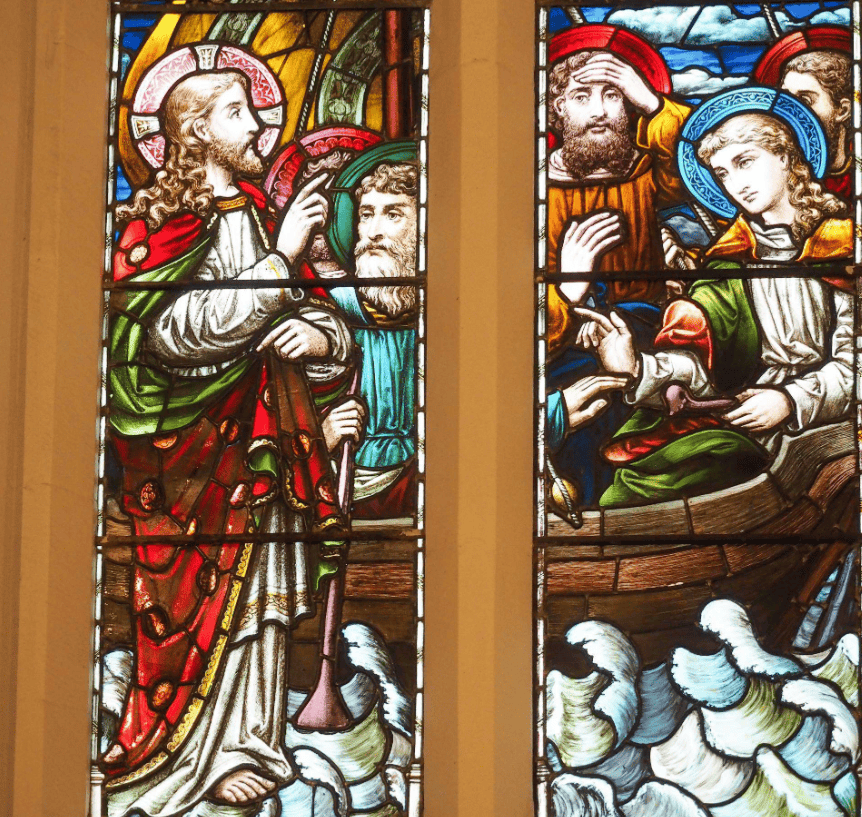
Jesus Walks on Water
If you’re anything like me, when you read the story of Jesus walking on the water (Matthew 14: 22–33), your first question is, “Did Jesus really walk on water?” It seems a bit unbelievable. So let me address that issue first, before I tell you what the main point of this story is. (The main point is not that the disciples have a religious experience and see Jesus walking on water, but I’ll get to that in a moment.)
One of the interesting things that biblical scholars do is try and work out the original setting of the stories that appear in the Bible. So, when scholars read this passage, they try to answer the question, “Before Matthew (the Gospel writer) wrote this story down and included it in his collection of stories about Jesus, what was the setting of the original event?”
There’s some thought among scholars that the original setting of this story was after the resurrection. We know that Jesus died on the cross somewhere from 27–33 AD. There are three historians from the time who refer to Jesus, independently of the New Testament. One of them, the Roman historian Tacitus, talks about Jesus of Nazareth being put to death by a local governor, Pontius Pilate. In other words, there is plenty of evidence for the crucifixion, both in the New Testament and in other sources.
The resurrection on the other hand depends on us believing the Gospel writers and having faith. That is how I make sense of Jesus being able to walk on the water, because this event could well have occurred after the resurrection. The disciples have what it often simply termed a religious experience. They are all alone on the Sea of Galilee, in fear of their lives, persecuted by the Romans, and terrified.
Therefore, Jesus walking on water, believe it or not, is not actually the main point of this story. The main point is what happens with Peter. Peter is a frightened man.
Today’s story is set in the middle of ferocious storm on a large inland lake in the northern part of Israel, called the Sea of Galilee. The disciples are being battered by the wind and the waves in their little fishing boat, and Jesus appears. He calls to Peter. He’s trying to help Peter overcome his fear; and Peter, God bless him, gives it a heck of a shot. He actually gets out of the boat, but then he notices the wind and the waves, remembers that he’s afraid, and he does the one thing that we should all do when we feel like we struggling to stay afloat in life: he cries out for help.
As soon as Jesus reaches out his hand and takes him back to the safety of the boat, the wind and the waves cease. Did you notice that the last time you read the story?
This story has one key message: when we feel like the storms of life are going to drag us under, we should ask for help. Say your prayers, ask God for help, ask other people for help. If I think about the really tough times of my life, the times when I’ve remembered to ask for help are the times I’ve got through so much better and eventually in a stronger condition. There’s a strength, which comes from asking for help. The ultimate source of that strength, of that energy, is God.
The Reverend Dr Theo McCall
School Chaplain