19 June 2025
Student Wellbeing Check-ins have now been operating at SPSC since early 2023. In the Junior school we use the ORAH app and in the senior school we use the BLOUM app. During our ‘Wellbeing Wednesday’ mentor group check-ins, students give feedback on their general mood and answer questions about various wellbeing domains. The main purpose of this process is to enable students to regularly provide mentors with real data regarding their own wellbeing. As we all know, personal wellbeing fluctuates regularly according to life and school issues. A weekly check-in caters for this potential for a sudden dip in wellbeing or mood and provides the opportunity for mentors to monitor and respond to that. In addition to responding to student requests for a wellbeing conversation, mentors also use the Bloum data to guide their ongoing 1:1 pastoral care conversations with students. Another important aspect of the check-ins is to provide us with data about how entire student cohorts are travelling with regard to the wellbeing domains, and to identify any trends that emerge according to age, time of year, House, etc.
Check-in Rates
For Bloum to realise its full potential and provide us with meaningful and valuable ongoing data, we must ensure strong student commitment to the check-in process, which equates to a minimum check-in rate of 70% each week. Da Costa House won our overall House check-in competition with a remarkable average rate of 96%, achieving a full 100% in two of the ten weeks. Of course, even if some students don’t always engage and enter data every week, the option and resource are always available to them.
Term 1 Data
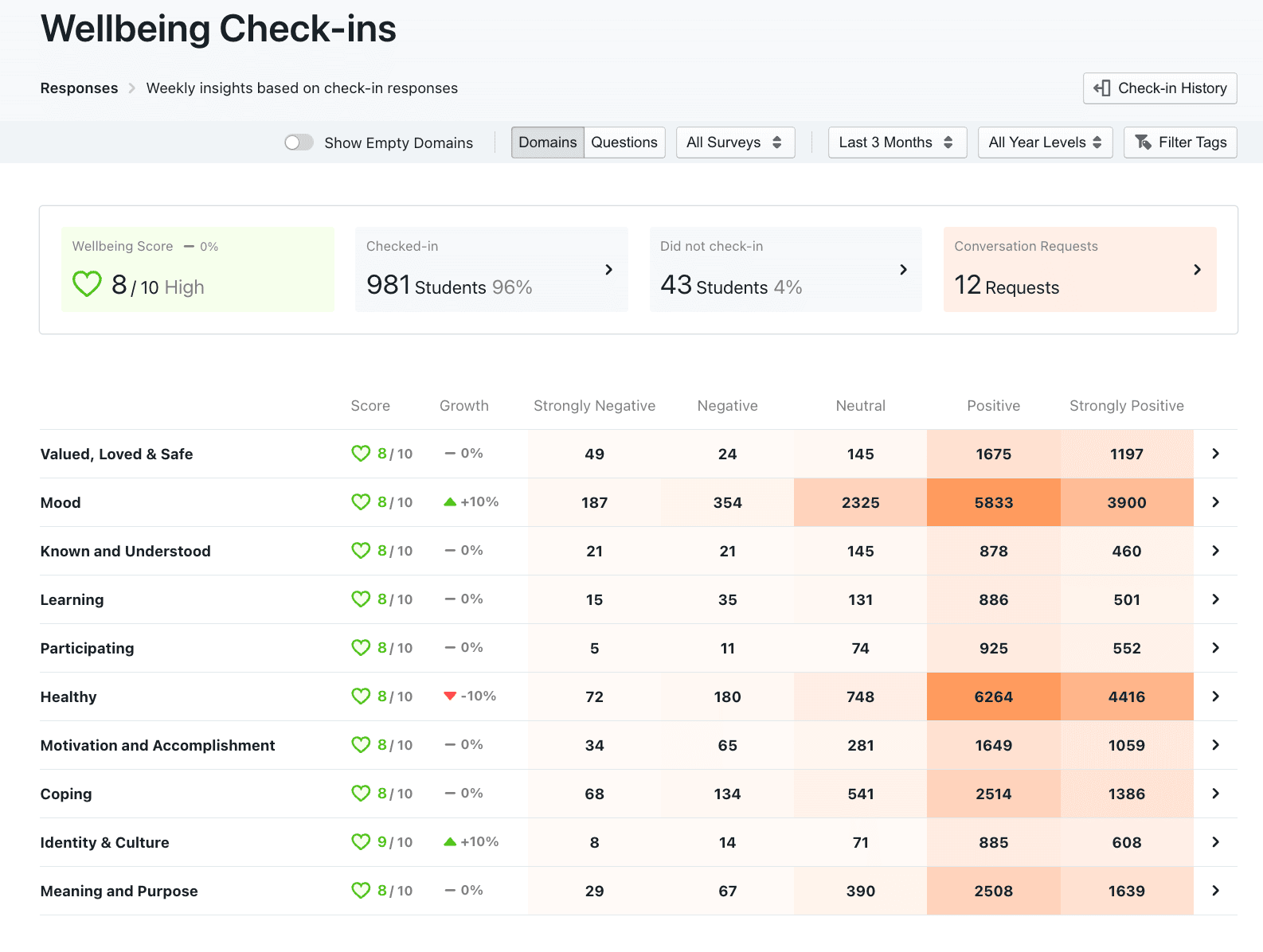
The table below for Term 1 data reflects that the mood question is asked every week and so generates higher numbers overall. The individual domain scores provide more specific feedback. Our ‘negativity bias’ tends to draw our focus to the negative scores, but the ‘positive’ and ‘strongly positive’ numbers clearly demonstrate that the vast majority of our students are feeling very happy about most aspects of their school, home and personal life.
Healthy
The Healthy and exercise data shows how much our compulsory sport policy is valued by the boys, and how Winter sport elevates exercise levels and feelings of being healthy.
Coping
The Coping data suggests that at key times of the term (especially the start and end), some students struggle to cope with the everyday challenges of school, sport and other commitments. This has prompted our analysis of what might be driving this data, and the timeline tends to confirm that when Intercol time coincides with SAT deadlines, students feel more pressure. The first few weeks of school also tend to carry more stress or challenge for students, as they become accustomed (Year 7 and new students) or re-accustomed to assessment and workload expectations, while establishing or re-establishing friendship groups and competing for selection in sport teams.
Coping Strategies
Coping strategies such as mindful practices, growth mindset, life scheduling and journalling are all taught in Wellbeing lessons in Years 7 to 10, but of course parents may choose to support these strategies from home.
- Helping boys to manage their week (work and free time) via clear timetables or schedules can relieve stress.
- Managing screen time and swapping screens for ‘outdoor immersion’ is so important.
- Social time and ‘play’ time is essential for young boys — unstructured play in the yard or on an oval.
- Laughter — try to inject moments of fun and laughter into the boys’ lives. Life can get too serious at times, and smiling and laughter are vital sources of ‘feel good’ endorphins.
Mr Sean Inman
Wellbeing Coordinator